Fuel trim explained
Quick answer
Short term fuel trim above positive 10 percent at idle but near zero at highway cruise points to unmetered air entering the engine after the mass air flow sensor, since the computer is adding fuel to compensate for a lean condition that only shows up at low airflow.

Innova 5210 OBD2 Scanner & Engine Code Reader, Battery Tester, Live Data, Oil Reset, Car Diagnostic Tool for Most Vehicles, Bluetooth Compatible with America's Top Car Repair App
A scanner with true live data streaming lets you watch short term and long term fuel trim change in real time across idle, cruise and load, which is the only way to actually interpret what fuel trim is telling you rather than reading a single static number.
Coverage varies by tool and by model year, so check a specific tool against a specific vehicle before buying.
What fuel trim actually is
Fuel trim is the percentage adjustment the engine computer makes to the calculated fuel injector pulse width in order to keep the air fuel mixture at its target ratio, typically close to the stoichiometric 14.7 to 1 ratio for gasoline. A positive fuel trim value means the computer is adding fuel because it detected a lean condition, more air relative to fuel than expected. A negative value means the computer is removing fuel because it detected a rich condition.
The difference between short term and long term
Short term fuel trim, STFT, is the immediate, second by second correction the computer makes based on the current oxygen sensor reading. It moves quickly and constantly as the engine runs, correcting in real time.
Long term fuel trim, LTFT, is a learned adjustment the computer builds over time by averaging short term corrections across many driving conditions. When short term trim consistently sits at the same offset under a given condition, the computer shifts that offset into long term trim as a baseline correction, freeing short term trim to fluctuate around a more accurate zero point going forward.
Reading the numbers: what counts as normal versus a problem
A healthy engine typically shows combined fuel trim, short term plus long term, within roughly plus or minus 10 percent under most conditions. Values that climb toward plus or minus 25 percent or beyond generally indicate a real problem the computer is struggling to fully compensate for, and many manufacturers set a trouble code, such as P0171 or P0172, once trim exceeds a defined threshold for long enough.
- Near 0 percent: mixture close to target, no significant correction needed
- Positive 10 to 25 percent: moderate lean correction, worth investigating
- Positive 25 percent or higher: significant lean condition, likely to trigger a code
- Negative 10 to 25 percent: moderate rich correction, worth investigating
- Negative 25 percent or lower: significant rich condition, likely to trigger a code
Why where the fault shows up matters as much as the number
The condition under which fuel trim shifts tells you where to look. A lean trim that appears mainly at idle and improves at higher airflow often points to a vacuum leak or an intake gasket, since a leak represents a larger proportion of total airflow at idle than it does at higher engine speed. A lean trim that is roughly consistent across idle and cruise more often points toward a fuel delivery issue, such as a weak fuel pump or a partially clogged injector, or a mass air flow sensor that is under reporting airflow across the board.
A rich condition concentrated at idle can point to a leaking injector or a stuck open EVAP purge valve introducing extra fuel vapor at low airflow. Comparing bank 1 to bank 2 trim on a V configuration engine also narrows the search, since a difference between banks usually points to something specific to one side, like a single leaking gasket, rather than something shared like a fuel pressure issue.
How to actually watch fuel trim on a scan tool
Start the engine cold and let it warm to operating temperature while watching trim in open loop, where the computer runs a preset fuel map rather than correcting from the oxygen sensor, then note when it switches to closed loop as it starts using live oxygen sensor feedback. Watch short term trim at a steady idle for at least thirty seconds to see where it settles, then take the vehicle through a steady cruise at highway speed and note whether the same trim pattern holds or shifts.
| Trim range | Mixture condition | Likely direction to investigate |
|---|---|---|
| 0 to plus/minus 10 percent | Normal correction range | No action needed |
| Plus 10 to 25 percent | Moderate lean condition | Check for vacuum leaks, intake gaskets, dirty MAF sensor |
| Plus 25 percent or higher | Significant lean condition | Vacuum leak, fuel pump weak, MAF sensor failing, exhaust leak before O2 sensor |
| Negative 10 to 25 percent | Moderate rich condition | Check EVAP purge valve, fuel pressure regulator, leaking injector |
| Negative 25 percent or lower | Significant rich condition | Leaking injector, stuck fuel pressure regulator, contaminated MAF sensor |
| Large difference between bank 1 and bank 2 | Bank specific issue | Check gasket, injector or exhaust leak on the affected bank only |
Equipment mentioned here
- LJPXHHU
OBD2 Bluetooth Scanner Car Code Reader for iOS, Android and Windows
- wireless
$13.98 Check pricePrices change often - Veepeak
Veepeak Mini Bluetooth OBD2 Scanner Code Reader for Android (NOT for iOS)
- wireless
$14.99 Check pricePrices change often - MOCATEC
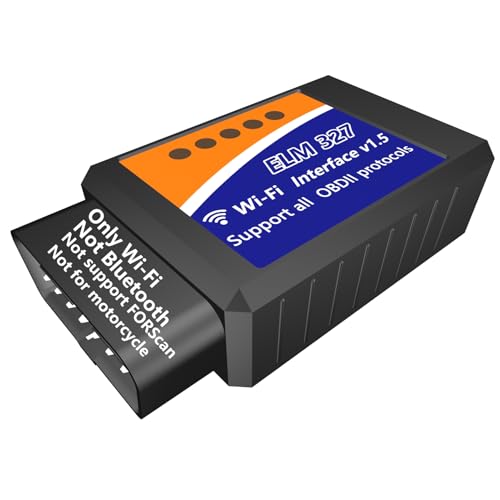
WiFi ELM327 OBD2 Adapter WiFi ELM 327 OBD Scanner for Universal 12V Vehicle
- wireless
$15.95 Check pricePrices change often - UMEIJA
OBD2 Scanner Diagnostic Tool, Car Scanner for iOS & Android, Bluetooth 5.4
- wireless
$29.99 Check pricePrices change often





Common questions
What is a normal fuel trim value?
Most healthy engines run with combined short term and long term fuel trim within roughly plus or minus 10 percent under typical driving conditions. Values consistently beyond plus or minus 25 percent generally indicate a real fault the computer is compensating for.
Why is my short term fuel trim high but long term fuel trim still low?
This usually means a fault is new or intermittent enough that the computer has not yet learned it into the long term correction. Given enough consistent driving under the same condition, the computer typically shifts more of that correction from short term into long term trim.
Can a bad oxygen sensor cause fuel trim to look wrong even if the mixture is fine?
Yes. Fuel trim calculations depend on the oxygen sensor's feedback being accurate. A slow, lazy or drifting oxygen sensor can cause the computer to apply an incorrect correction even if the actual air fuel mixture is closer to target than the trim numbers suggest.
What does it mean if fuel trim is normal at idle but goes lean at highway speed?
This pattern often points toward a fuel delivery limitation that only becomes apparent under higher demand, such as a weak fuel pump or a partially clogged fuel filter that cannot keep up with the higher flow rate required at highway speed and load.
Do all vehicles show fuel trim as a percentage?
Most OBD2 compliant vehicles report fuel trim as a percentage under the standardized PID, but the exact display format and available bank by bank breakdown depends on the scan tool and how the manufacturer implemented the parameter. Check your specific scan tool's live data screen for how trim is presented on your vehicle.