How OBD2 works
Quick answer
OBD2 is a federally mandated onboard diagnostic standard, required on every gasoline car sold in the United States starting with the 1996 model year, that forces all automakers to use the same 16 pin connector, the same code format and the same core set of monitored systems even though the wiring and processors underneath are proprietary to each brand.

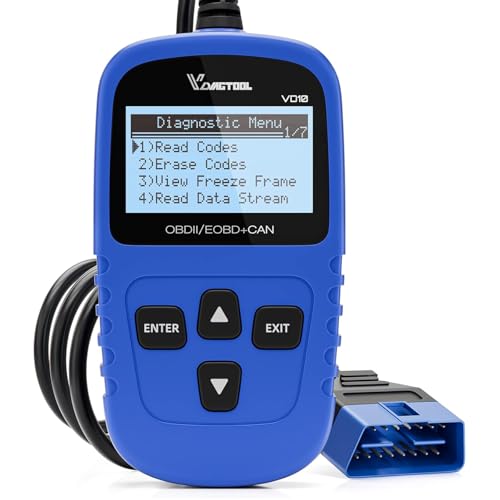
ANCEL AD310 Classic Enhanced Universal OBD II Scanner Car Engine Fault Code Reader CAN Diagnostic Scan Tool, Read and Clear Error Codes for 1996 or Newer OBD2 Protocol Vehicle (Black)
A basic generic scanner is the right first tool for learning the OBD2 system itself, since it reads the standardized codes and live PIDs every 1996 or newer gasoline vehicle shares, without the cost of enhanced manufacturer functions you do not need yet.
Coverage varies by tool and by model year, so check a specific tool against a specific vehicle before buying.
What problem was OBD2 built to solve
Before the mid 1990s, every automaker used its own diagnostic connector, its own code numbers and its own scan tool. A codes reader built for one brand was useless on another, and emissions inspectors had no consistent way to check whether a car's pollution controls were working.
The Environmental Protection Agency and the Society of Automotive Engineers solved this by mandating a single standard: On Board Diagnostics, second generation, or OBD2. Every gasoline vehicle sold in the United States from the 1996 model year forward must implement it, and the European Union followed with its own equivalent, EOBD, starting in 2001 for gasoline and 2003 to 2004 for diesel.
What does the standard actually require
OBD2 does not standardize how a car's computer works internally. Each manufacturer still writes its own engine control software and wires its own sensors. What OBD2 standardizes is the interface: the physical connector shape and pin layout, the electrical signaling protocol, the trouble code numbering format, and a defined list of data values called parameter IDs, or PIDs, that any compliant scan tool can request.
That is why a fifteen dollar generic code reader can pull a P0301 misfire code from a Honda, a Ford and a Chevrolet alike. The code format is shared even when the underlying fix is completely different on each platform.
- A single 16 pin connector, typically within reach of the driver's seat
- A shared trouble code format: one letter, four digits, for example P0301
- A required list of monitored emissions systems, called readiness monitors
- A defined set of live data PIDs every vehicle must expose
- Mode 6 test results for internal component self tests
How the car's computer decides to set a code
The powertrain control module, or PCM, continuously compares sensor readings against expected ranges. When a reading falls outside those ranges for long enough, and often only after the failure repeats across more than one drive cycle, the PCM stores a diagnostic trouble code, records a freeze frame snapshot of conditions at that moment, and in most cases lights the malfunction indicator lamp, the check engine light, on the dashboard.
This is a threshold and pattern based system, not an instant trigger. A single momentary glitch usually will not set a code. A repeatable fault that the PCM sees across a defined number of trips will.
Which protocol is actually running under the connector
Five electrical signaling protocols have been used under the OBD2 standard since 1996, and knowing which one a given vehicle uses explains why some scanners will not talk to some cars. Since 2008, every vehicle sold in the United States has been required to use Controller Area Network, or CAN, which is why virtually every scanner made in the last decade only needs to support CAN to cover the modern fleet.
What a scan tool is actually doing when it plugs in
A scan tool is a translator, not a diagnostic brain. It sends a request over the connector asking the PCM for stored codes, live data or test results, the PCM answers in the standardized format, and the tool decodes that answer into readable text. The tool did not diagnose anything on its own. It only retrieved information the car's computer had already recorded.
This matters because two different scanners reading the same car will report the same underlying data. Differences you see between tools are almost always differences in how much of that data each tool chooses to display, not differences in what the car is telling them.
| Protocol | Connector pins used | Typical automakers | Years commonly used |
|---|---|---|---|
| SAE J1850 VPW | Pin 2 | General Motors | 1996 to 2004 |
| SAE J1850 PWM | Pins 2 and 10 | Ford | 1996 to 2003 |
| ISO 9141-2 | Pin 7 | Chrysler, European and Asian imports | 1996 to early 2000s |
| ISO 14230 KWP2000 | Pin 7 | Later Chrysler, European and Asian imports | Early to mid 2000s |
| ISO 15765 CAN | Pins 6 and 14 | All manufacturers, required industry wide | 2003 onward, mandatory by 2008 |
Equipment mentioned here
- LJPXHHU
OBD2 Bluetooth Scanner Car Code Reader for iOS, Android and Windows
- wireless
$13.98 Check pricePrices change often - Veepeak
Veepeak Mini Bluetooth OBD2 Scanner Code Reader for Android (NOT for iOS)
- wireless
$14.99 Check pricePrices change often - MOCATEC
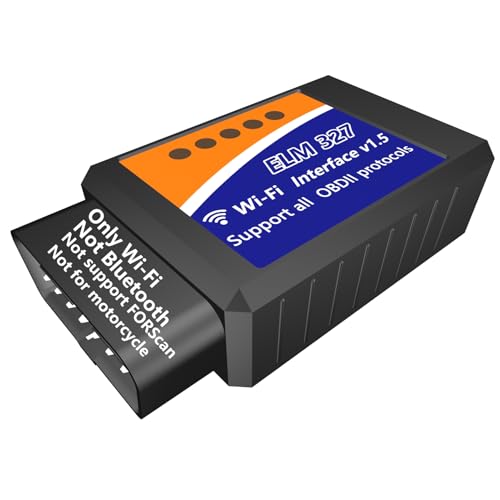
WiFi ELM327 OBD2 Adapter WiFi ELM 327 OBD Scanner for Universal 12V Vehicle
- wireless
$15.95 Check pricePrices change often




Common questions
What does OBD2 actually stand for?
On Board Diagnostics, second generation. The first generation, OBD1, was a loose collection of manufacturer specific systems used through the mid 1990s. OBD2 replaced that patchwork with one federally mandated standard covering the connector, code format and monitored data on every gasoline vehicle sold in the United States from the 1996 model year forward.
Can a generic OBD2 scanner read every system in my car?
No. The OBD2 mandate covers emissions related powertrain systems: the engine and transmission controls that affect tailpipe output. Anti lock brakes, airbags, climate control and infotainment sit on separate modules that a basic generic scanner cannot see. Reading those requires a scanner with enhanced or full system coverage.
Why do two different scan tools show slightly different information for the same code?
Both tools are reading identical data from the same PCM, since OBD2 standardizes what is stored. The difference is presentation: one tool may show a generic code description while another adds a manufacturer specific note, or one may display more live PIDs on screen than the other. The underlying fault data is the same.
Is OBD2 the same in every country?
The core connector and protocol standard is shared internationally, but the mandate dates differ. The United States required OBD2 starting with 1996 gasoline models. The European Union phased in its own equivalent, EOBD, starting in 2001 for gasoline vehicles and a few years later for diesel. Other markets adopted similar timelines.
Do electric vehicles have OBD2 ports?
Most electric vehicles sold in markets that require OBD2 still include the 16 pin connector for regulatory and service access, but since there is no combustion engine or traditional emissions system, the data available is far more limited than on a gasoline vehicle, and there is no readiness monitor or fuel trim data to read.
Does plugging in a scan tool ever change how the car runs?
Reading codes or live data is passive and does not alter engine operation. Only functions that explicitly write to the module, such as clearing codes, running a bidirectional actuation test or reprogramming, change anything, and reputable scan tools require a deliberate confirmation before performing those.