Bidirectional vs read-only scanners
Quick answer
A read-only code reader tells you what is wrong; a bidirectional scanner like the Launch Creader Elite ($119) lets you command a module to act, such as cycling a cooling fan or actuating a solenoid, so it can also tell you whether the fix worked.

Launch Code Reader, All Systems Bi-Directional Professional Automotive Diagnostic Scan Tool
DIYers and independent techs who need to command a component (idle relearn, fan test, ABS bleed) rather than just read what happened after the fact.
Coverage varies by tool and by model year, so check a specific tool against a specific vehicle before buying.
| Bidirectional | Read-only | |
|---|---|---|
| What it does | Reads codes and sends commands back to modules | Reads and clears codes, shows freeze frame |
| Actuation tests | Yes, on supported systems (fans, solenoids, relays) | No |
| Resets and relearns | Often includes oil, EPB, throttle body, battery | Rarely, sometimes basic oil reset only |
| Live data | Yes, usually with graphing | Sometimes, often text-only |
| Typical price | $100 to $500+ | $15 to $50 |
| Learning curve | Steeper, menus per system and per make | Minimal, plug in and read |
| Best for | Home mechanics doing real repairs | Check engine light triage |
Do you actually need to command anything?
The dividing line is not how serious you are about cars, it is whether your task requires the tool to push a signal to a module rather than just receive one. Reading a P0455 code and finding a loose gas cap needs nothing more than a reader. Confirming a new EVAP purge valve actually opens on command needs a scanner that can send that command.
If you cannot picture a repair where you would want to trigger a component yourself, a read-only reader covers you completely and costs a fraction of the price.
What bidirectional control actually unlocks
Bidirectional tools can typically run a limited menu of tests per vehicle: cycle the radiator fan, fire an injector, cycle the EVAP purge or vent solenoid, run an ABS pump bleed sequence, or force a component into a test state. Coverage varies a lot by vehicle make and model year, so no bidirectional tool does everything on every car.
This matters most for brake jobs (ABS bleeding on many late-model vehicles needs an active bleed procedure), throttle body cleaning (idle relearn), and any diagnosis where you need to prove a part responds before you trust a repair.
- Cooling fan and relay activation tests
- EVAP purge and vent solenoid commands
- ABS/ESC active brake bleed procedures
- Throttle body and idle relearns
- Battery, oil, and service light resets
Where read-only tools still win
A basic reader is faster to use, cheaper to replace if lost, and has almost nothing to learn. For the most common request on this site, a check engine light that needs a code pulled and cleared, a reader does the job in under a minute with zero menu diving.
Read-only tools also tend to be more reliable across a wider range of older vehicles since they rely only on the mandatory generic OBD2 protocols rather than manufacturer-specific bidirectional commands.
The upgrade path most people actually take
Many buyers start with a cheap reader, get comfortable with codes and freeze frame data, then upgrade to a bidirectional scanner once they take on a repair that needs an active test. That is a reasonable path and it means the first purchase is rarely wasted money, since a $20 reader stays useful as a glovebox backup even after a bidirectional tool arrives.
Price is not the only gap
Bidirectional tools cost more, but the bigger difference buyers underestimate is setup time. Expect to pick your vehicle year, make, and model from a menu before running any bidirectional function, versus plugging in and reading generic codes instantly with a basic reader.
Read-only
Anyone who just wants to know why the check engine light is on, clear a code after a repair, and confirm it stays off.

Other tools in this comparison
- Autel
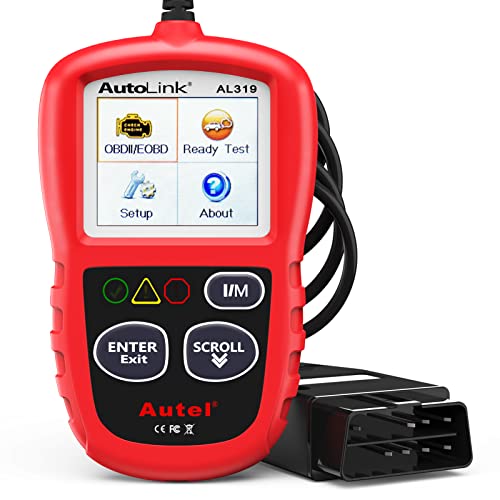
Autel AL319 Professional OBD2 Scanner, Enhanced Check Engine Code Reader
$27.99 Check pricePrices change often - AUTOPHIX
AUTOPHIX OM126P OBD2 Scanner, Check Engine Light Code Reader for OBD2 Cars
$49.99 Check pricePrices change often




Common questions
Can a bidirectional scanner do everything a read-only reader does?
Yes. Bidirectional scanners read and clear generic and manufacturer codes, show freeze frame, and display live data on top of their active test functions. The read-only feature set is a strict subset of what a bidirectional tool offers, so there is no capability you lose by stepping up, only cost and complexity you take on.
Will a bidirectional scanner work on my specific car?
Basic code reading works on any OBD2 vehicle sold since 1996 in the US. Bidirectional functions are manufacturer and often model-year specific, so coverage on your exact vehicle is not guaranteed even on a scanner that lists your brand. Check the listed vehicle coverage before buying if a specific active test is the reason you are upgrading.
Do I need bidirectional for a simple check engine light?
No. A P0300 misfire or a P0420 catalyst code needs a reader to identify, and the repair itself, like replacing a coil or a sensor, does not require sending a command back through the scanner. Bidirectional only matters when confirming or performing the fix requires actuating a component.
Is bidirectional the same as full-system scanning?
No, those are separate features that often overlap but are not identical. Full-system scanning means the tool can read codes from modules beyond the engine, such as ABS, SRS, and transmission. Bidirectional means the tool can send commands to those modules. A tool can be full-system without being bidirectional.
Are bidirectional scanners harder to use for a beginner?
There is more menu navigation since you select vehicle year, make, model, and system before running a test, but the read-and-clear function works the same simple way it does on a basic reader. Most beginners can ignore the bidirectional menus entirely until they need them.