P0430 on a Toyota
Quick answer
On Toyota and Lexus V6 models, P0430 is the bank 2 counterpart to P0420 and is documented to often appear alongside it rather than alone, since both banks share similar sensor sensitivity and exhaust routing.
Severity 2 of 4. Yes, while you arrange a repair.
Fix soon · Safe to keep driving
| Code | P0430 |
|---|---|
| Standard name | Catalyst System Efficiency Below Threshold (Bank 2) |
| Make | Toyota |
| Severity | Fix soon (2 of 4) |
| Safe to drive | Yes, while you arrange a repair |
| Tool needed | Scanner with live data |

TOPDON TopScan Lite OBD2 Scanner, Bidirectional Scan Tool, 8 Resets & AI
Adds live sensor streams and freeze frame, which is what turns a code into a diagnosis rather than a guess.
Coverage varies by tool and by model year, so check a specific tool against a specific vehicle before buying.
What is different about P0430 on a Toyota?
Because Toyota's V6 catalyst monitoring logic applies symmetrically across both banks, P0430 diagnosis largely mirrors P0420, with the main practical difference being physical access to the bank 2 side.
What Toyota owners run into with P0430
Frequently paired with P0420 on V6 models: Owners of 2GR-FE and related Toyota and Lexus V6 engines commonly report P0420 and P0430 appearing together rather than in isolation, since the same sensor sensitivity and catalyst monitor logic applies symmetrically to both banks.
Bank 2 sensor access is often more difficult: On many transverse-mounted Toyota V6 layouts, the bank 2 (rear-facing) downstream oxygen sensor sits in a less accessible location than bank 1, which owners and independent shops have documented as adding labor time to bank 2 sensor diagnosis and replacement compared to bank 1.
What to check first on a Toyota
The order below narrows the generic P0430 list down to what is worth checking first on this make. It is a starting order, not a diagnosis: patterns are generation specific and a vehicle outside those generations may have none of them.
Check in this order
- Check whether P0420 is also present, which is common on V6 Toyota models and points to a shared sensor sensitivity issue
- Inspect the bank 2 downstream oxygen sensor and connector, noting it may be harder to access than bank 1
- Check for exhaust leaks specific to the bank 2 side
- Compare bank 1 and bank 2 sensor live data if both codes are present
The generic picture behind P0430
This is the same catalyst efficiency comparison used for bank 1, applied to bank 2, the cylinder bank on the opposite side of a V6 or V8 engine. The computer compares the oxygen sensor signal before bank 2's catalytic converter to the one after it, and this code sets when the downstream signal starts mirroring the upstream signal too closely instead of showing normal oxygen buffering, meaning that converter is no longer storing and releasing oxygen the way a working one does.
Everything on the main P0430 page still applies here. This page narrows the cause list to the patterns documented on Toyota vehicles, it does not replace the underlying definition.
The generic version of this code
Tools that can diagnose P0430
Adds live sensor streams and freeze frame, which is what turns a code into a diagnosis rather than a guess.
- LJPXHHU
OBD2 Bluetooth Scanner Car Code Reader for iOS, Android and Windows
- wireless
$13.98 Check pricePrices change often - Veepeak
Veepeak Mini Bluetooth OBD2 Scanner Code Reader for Android (NOT for iOS)
- wireless
$14.99 Check pricePrices change often - MOCATEC
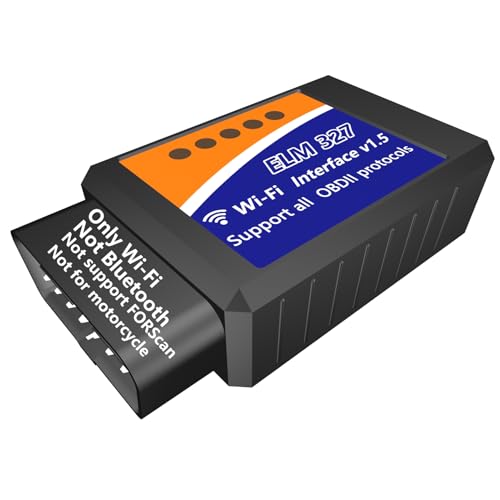
WiFi ELM327 OBD2 Adapter WiFi ELM 327 OBD Scanner for Universal 12V Vehicle
- wireless
$15.95 Check pricePrices change often - UMEIJA
OBD2 Scanner Diagnostic Tool, Car Scanner for iOS & Android, Bluetooth 5.4
- wireless
$29.99 Check pricePrices change often




Common questions
Why do I have both P0420 and P0430 on my Toyota V6?
Toyota and Lexus V6 engines apply the same catalyst efficiency monitoring logic symmetrically to both exhaust banks, so a shared cause, most often a sensor sensitivity issue rather than two separately failed catalysts, commonly triggers both P0420 and P0430 together.
Is the bank 2 catalyst harder to reach on a Toyota V6?
On many transverse-mounted V6 Toyota layouts, the bank 2 side sits toward the firewall and is documented as less accessible than bank 1, which can mean more labor time for inspection or sensor replacement on that side specifically.